Best smart thermostat 2026: stay warm and save money with these smart heating systems
Top picks for the best smart thermostats and smart radiator valves from Nest, Hive, Tado and more


The best thermostats keep your home heated to perfection during winter and nice and cool during the summer. However, if you're wondering why you need a new one if your current non-smart one already does that, listen up. We could all do with saving money on our energy bills right now, and whilst we’re not saying a smart thermostat will solve all your problems, it can certainly help save you money and energy where your heating is concerned.
The best smart thermostats adjust your home’s temperature based on factors like the weather outside and your personal habits. You can have total control over the thermostat wherever you are, and you can even connect it to your best smart speaker to make it easier to control the temperature. They can also learn your routine so the heating can be turned on at the exact right moment, for example, just before you wake up in the morning or just before you get home from work.
Our current top pick is the Tado Smart Thermostat, which we’ll get into in more detail below. In this guide, we’ve rounded up the best smart thermostats across a range of price points, along with a mix of features to suit different homes. If you’re deciding between the biggest names, it’s also worth checking out our comparison of Nest vs Hive vs Tado for a closer look at how they stack up.
The top three

The best smart thermostat overall
The Tado Smart Thermostat is our favourite smart thermostat for many reasons, but especially for its app, air quality monitoring and wide compatibility.

The best affordable smart thermostat
Smart thermostats can often be pricey, but if you want one that performs well whilst still being affordable, choose the Hive Thermostat.

The best premium smart thermostat
If you prefer your smart thermostat to be on the premium side, the Drayton Wiser 2nd Gen Smart Thermostat Kit does the job brilliantly well.

Lizzie is T3’s Home Senior Writer, specialising in smart home technology and connected living. She covers a wide range of smart home energy devices, making her your go-to expert for finding the right setup to suit your home and budget.
We’ve updated our best smart thermostat guide with new premium and budget-friendly picks, as well as moving the Tado Smart Thermostat into the top spot.
Best smart thermostat 2026
The best smart thermostat overall


The Tado Smart Thermostat is a refined, compact device, and despite its fairly simple LCD display, it still manages to look clean and modern on the wall. It’s also impressively compatible, working with around 95% of heating systems on the market, including combi and conventional boilers, underfloor heating and hot water systems.
Whilst Tado recommends professional installation, it claims the V3+ can typically be fitted in about an hour by someone confident with basic DIY, so it’s still relatively accessible if you’re comfortable using a screwdriver and following instructions carefully. Control is handled through the Tado app, which is well designed and easy to navigate, and there’s also support for all three major smart assistants, making it simple to integrate into a wider smart home setup.
One of its strongest features is how intelligently it manages heating. It can learn the layout and heat characteristics of your home, allowing it to start heating slightly earlier so your rooms reach the target temperature exactly when you want them. It also includes geofencing, so it knows when you’re heading home and can start warming things up in advance, or reduce heating when you’ve left.
The best affordable smart thermostat


The Hive Thermostat is developed by British Gas, although you don’t need to be a customer to use it. The system is installed by a qualified engineer and typically includes a boiler receiver, an internet-connected hub, and a wall-mounted thermostat. Whilst the design isn’t as sleek as something like Nest, it still looks clean and modern enough for most homes – and it’s firmly established as one of the best smart thermostats available.
One of Hive’s biggest strengths is how straightforward it is to use. Whether you’re adjusting settings on the thermostat itself or through the mobile app (available on iOS and Android), everything feels intuitive and easy to manage. You can change temperatures, set heating schedules, or control your system remotely from anywhere.
It also includes geolocation features, meaning the heating can automatically turn off when you leave the house and switch back on as you return. This works through the app’s location tracking, and can be shared across multiple household members, so the system responds to everyone’s movements rather than just one person.
Hive is also designed to be expandable. It works with a wider ecosystem of connected devices, including smart plugs and sensors, allowing you to build out a more complete smart home setup over time. There’s also flexibility in how you pay, with options for upfront purchase or subscription, which includes ongoing support.
The best premium smart thermostat

The Drayton Wiser 2nd Gen system stands out as a premium smart thermostat largely because it’s designed as a full heating ecosystem, not just a single device. Rather than simply controlling one temperature point, it supports multi-room heating with smart radiator thermostats, allowing you to manage different zones independently. This makes it far more flexible for larger homes or more complex heating setups, especially if you want precise control over where and when heat is used.
The system includes advanced scheduling, eco modes and automation features designed to reduce energy usage – potentially by up to 30% depending on how it’s used. It also integrates with voice assistants and connects to a wide range of additional smart home devices, meaning it goes beyond heating into broader home automation. Compared to simpler thermostats, this added depth is what justifies the higher price point.
Finally, it balances that advanced functionality with a system that’s still relatively straightforward to expand and manage. Whilst the initial hub installation is typically done by a professional, additional components like radiator valves and sensors can be added wirelessly with minimal effort.
The best Google smart thermostat

This 3rd-generation Nest Learning Thermostat is able to monitor your habits and control the heating accordingly. So, for instance, if regularly go to bed at 11pm or so, the system learns from that and starts turning the system off around that time. Before long you're saving money and you don't even have to touch the Nest.
Another smart feature the Nest brings to the party is an on-board activity sensor that can take an educated guess as to whether anyone is at home or not, and then adjust the heating schedule accordingly. If you want to take more manual control, over when the heating starts and stops, then the Nest is easy to schedule using the accompanying app.
That circular glass interface is beautiful to behold and so incredibly simple use – all you require is an opposable thumb and a forefinger. Whilst the Nest Learning Thermostat comes with everything you need to fit it, we'd say you're better off having an engineer do it, especially as the price includes installation.
With the Nest Thermostat E delivering essentially the same performance and functionality but for a much cheaper price point, potential buyers should evaluate just how much they desire the more premium aesthetic, though.
The best easy-to-install smart thermostat
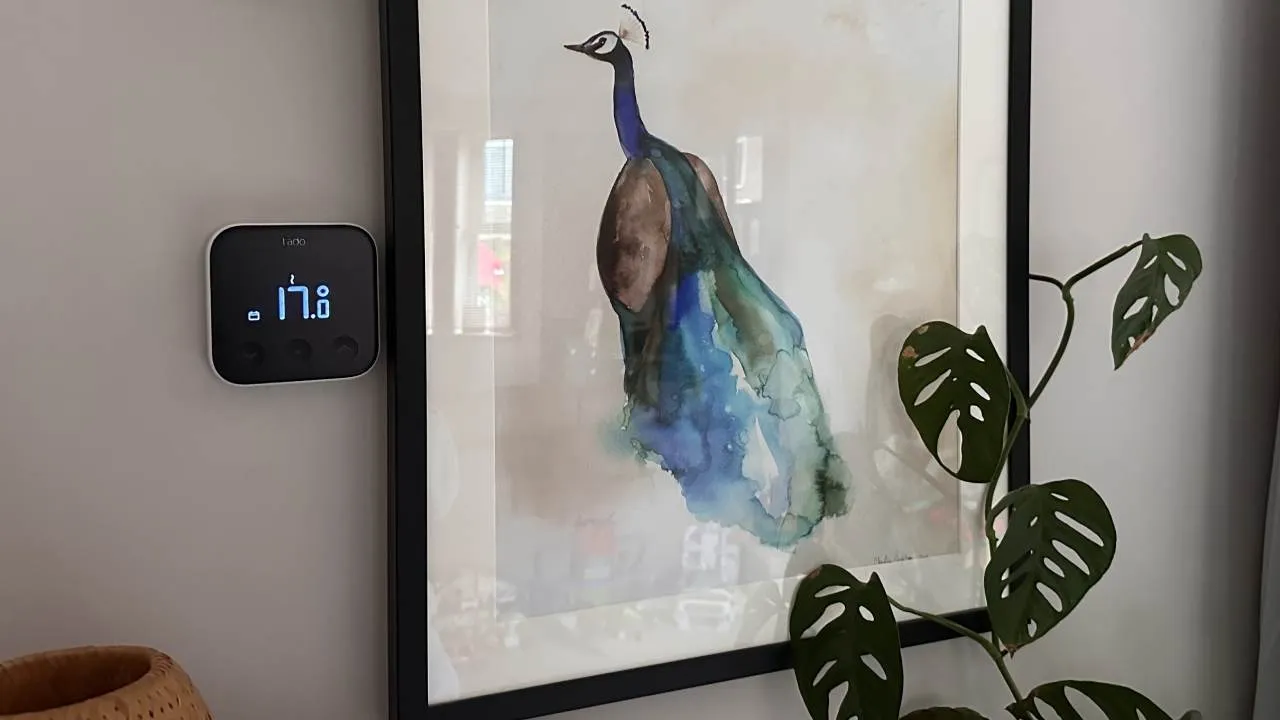
The Tado Smart Thermostat X is a strong upgrade from the original model – which still holds the top spot in this guide – but where it really stands out is ease of installation. It’s designed to replace existing wired thermostats or work wirelessly depending on your setup, so you’re not tied to one complicated installation route. Whether you’re working with a standard boiler, underfloor heating or a multi-zone system, it’s built to fit into your current setup rather than requiring a full rethink. That flexibility makes it far more approachable than systems with stricter requirements.
Another key advantage is how the system is structured. The X range uses Thread and Matter, allowing devices to connect via a mesh network instead of relying on a single hub. In practice, this means fewer connection issues during setup and less dependence on where your router is positioned. Most kits – particularly the wireless starter versions – also come with everything you need in the box, and in some cases, the Thread border router is built directly into the receiver to cut down on extra components.
The setup process itself is also well handled. The app guides you through installation step by step, and the hardware is designed to be straightforward to mount and connect (or skip wiring entirely if you’re using a wireless configuration). Compared to older smart thermostats that often required professional installation, the Tado X is much more DIY-friendly, whilst still giving you the option to bring in an engineer if needed.
How to choose the best smart thermostat
There aren’t pages of specs to compare when choosing the best smart thermostats, as most of them work in broadly similar ways, but there are still a few key things worth considering before you buy. Compatibility is one of the biggest, and it’s important to make sure your thermostat will work with your existing smart home setup, whether that’s your voice assistant, other devices, or your heating system itself.
For example, if you’re already using Amazon Alexa to control your home, it makes sense to choose a thermostat that supports it, rather than switching ecosystems entirely. The same applies if you’re using Google Assistant or Apple HomeKit. It’s also worth checking with your energy provider, as some offer discounts or incentives on certain smart thermostats, which can make a noticeable difference to the upfront cost.
Beyond that, the best smart thermostat for you is one that adapts to your routine and starts improving efficiency quickly. Features like scheduling, learning behaviour and geofencing all help to reduce unnecessary heating, and the quality of the app plays a big role here too. A clear, well-designed app makes it much easier to fine-tune your settings and actually get the most out of the system.
Zonal heating is another factor to consider. Many systems support multi-room setups, and some let you control individual radiators, so you can prioritise heating in the rooms you use most. This can make a big difference to both comfort and energy usage, particularly in larger homes.
How we test the best smart thermostats
When testing smart thermostats, we focus on how they perform on a daily basis rather than just judging features on paper – including installing them directly in our own homes. Setup is a big part of this, and we assess how straightforward the installation process is, whether it’s suitable for DIY or requires professional fitting, and how clearly the app guides you through each step.
We then look at usability over time. This includes how intuitive the app is, how easy it is to adjust schedules and temperatures, and how well the thermostat integrates with smart home platforms like Amazon Alexa, Google Assistant and Apple HomeKit. Reliability is also key, so we pay close attention to connection stability and how consistently the system responds to commands.
Performance is tested over several weeks to see how effectively the thermostat manages heating in day-to-day use. We evaluate how accurately it reaches and maintains target temperatures, how well features like geofencing and learning schedules work, and whether it actually helps reduce unnecessary heating.
Best smart thermostat FAQs
Can a smart thermostat really save money on energy bills?
Yes, a smart thermostat can help reduce energy bills, although the exact savings depend on how you use it. Features like scheduling, geofencing and adaptive learning prevent your heating from running when it’s not needed. Instead of heating an empty home, the system focuses on the times you’re actually there.
Are smart thermostats easy to install?
Installation varies depending on the model and your existing heating system. Some smart thermostats are designed for DIY installation and come with step-by-step app instructions, making them manageable for those comfortable with basic wiring. Others may require a professional engineer, particularly if they involve more complex boiler connections.
Do smart thermostats work with all heating systems?
Most smart thermostats are compatible with a wide range of heating systems, including combi boilers, conventional boilers and underfloor heating. However, compatibility isn’t universal, so it’s important to check before buying. Some systems may require additional components or professional installation to work correctly.
Reviewer Panel

Spencer is T3’s former Style and Travel Editor, but his expertise extends well beyond those categories. He has tested a wide range of smart home technology, and his insights continue to shape T3’s buying guides.

Emily is one of T3’s most trusted freelance reviewers, with extensive experience across smart home and lifestyle tech. Over the years, she’s tested everything from smart thermostats to security systems.

Max is T3's Tech Writer, covering a broad range of consumer technology, but he also regularly contributes to home and smart home reviews.

Nick is T3’s Editor, overseeing the site’s content and editorial direction. Alongside his role, he has contributed to a number of home and smart home reviews, bringing a wider perspective on product performance.